
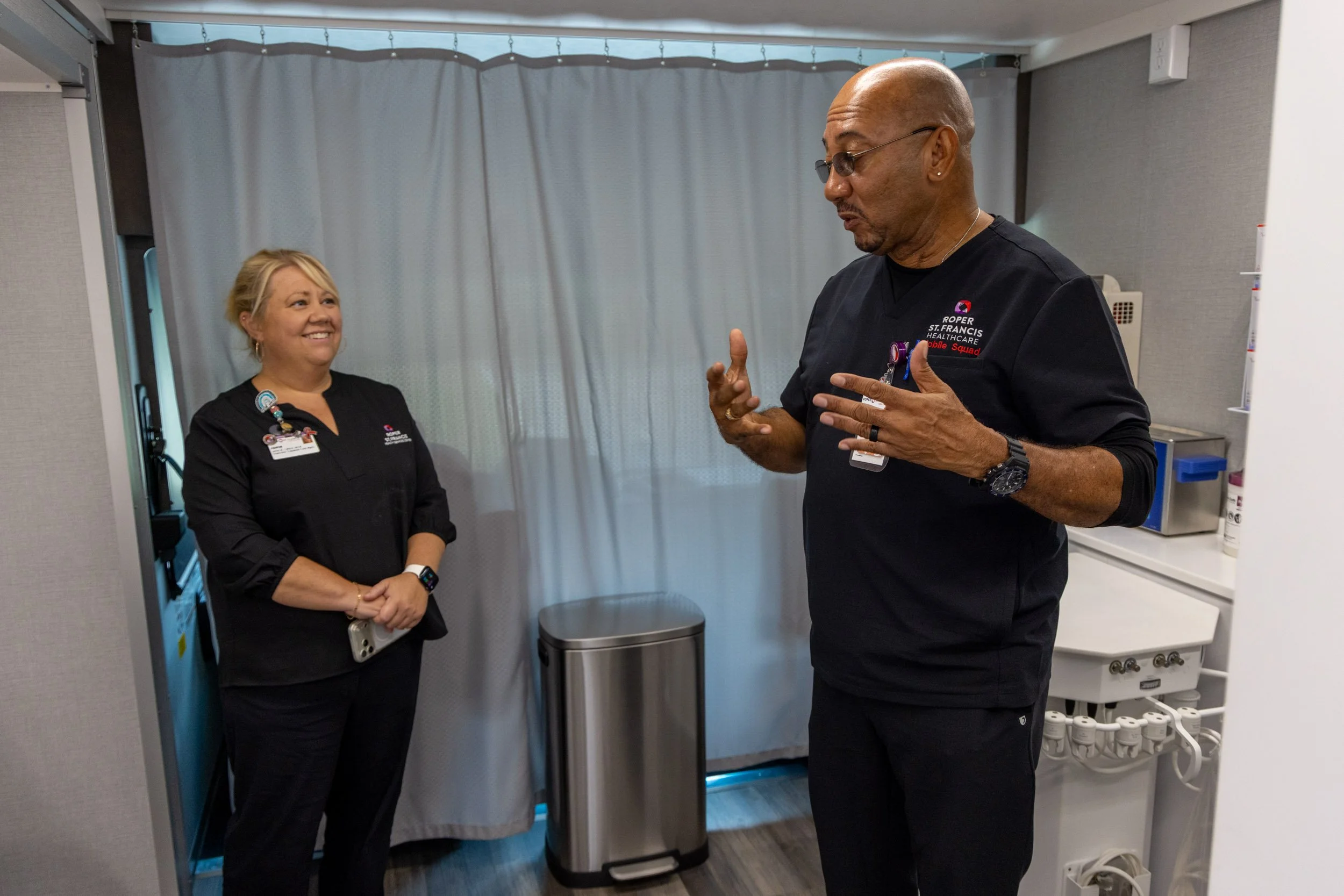
From left to right: Barry Graves, Tawana Philpott Brown and Chloe Biddle.
For Barry Graves, community health is personal. Growing up in rural South Carolina, he witnessed firsthand the challenges people face in accessing healthcare. Now, the emergency medical technician (EMT) and community coordinator for Roper St. Francis Healthcare’s new Mobile Care for You unit is helping bridge that gap.
Operated by the Roper St. Francis Health Services Center, the 40-foot unit was unveiled in October and will hit the road in January, serving seven counties: Berkeley, Charleston, Colleton, Dorchester, Georgetown, Horry and Williamsburg.
Services will include:
Primary and preventive care
Health screenings and vaccinations
HIV prevention, testing, care and treatment linkage
STI testing and treatment
PrEP education and navigation
Care coordination and health education
Preventive dental services
Graves will work alongside community health worker Chloe Biddle and a dedicated nurse practitioner who will join the team in December.
GET TO KNOW barry graves
How did you get your start in healthcare?
Barry Graves
My background is in manufacturing. I worked at the paper mill, where we had our own rescue squad and ambulance. It all started when I signed up for a CPR class.
I was impressed by how closely the rescue squad worked together and how dedicated they were to training. When an opportunity came to become an EMT, I signed up. I’ve always had a curiosity about medicine.
I earned my South Carolina EMT license in 2016 and later earned my national certification.
What inspires your passion for community health?
I grew up in a rural community near Beaufort, where people often had to travel 30 minutes to an hour to reach a hospital, see their primary care provider or fill a prescription.
Emergencies are unplanned, but it helps if you know how to respond when someone needs your assistance. In rural communities, every second literally counts.
I think one of the gifts I bring to this role is understanding some of the barriers people face and knowing how to reach them.
What has being an EMT taught you about caring for others?
Everyone has a story to tell. Sometimes, it only takes one or two life events for someone’s circumstances to change dramatically.
I believe everyone wants to know that they matter. Sometimes people feel like the world has forgotten them. Part of my job is letting them know that, in spite of everything, there are still people who care about their well-being.
Sometimes, just having someone listen can lift their spirits.
What drew you to your new role in community health?
Growing up in a rural area helped me understand some of the barriers people face. I’ve witnessed them throughout my life.
I think one of the gifts I bring to this role is understanding those needs and knowing how to reach people. Churches, senior centers and other community gathering places offer great opportunities for us to connect with residents.
How are you preparing to reach the communities you’ll serve?
We’re already connecting with community organizations to understand what services their residents need and how we can work together. Churches, senior centers and other gathering places offer great opportunities to connect with residents.
In rural communities, word of mouth travels. We want to build trust by showing up when we say we will and doing what we say we’re going to do.
Why is patient education such an important part of this work?
I’ve always believed that the best decision is an informed decision.
It’s not just about providing healthcare services. It’s an opportunity to educate people about their health, explain why certain conditions are concerning and help them understand the resources available to them.
Hopefully, after an encounter with me, they’ll remember at least one thing I’ve shared that helps them make a healthier decision. They might even share that information with a family member.
What advice would you give someone about staying calm in an emergency?
Focus on your training and don’t doubt yourself. Trust your team. Communicate, and don’t be afraid to ask questions.
Afterward, take time to reflect together on how you approached the situation and whether you could have done anything better. That builds your confidence, but it also strengthens your team.
Who is Barry outside of work?
I love being outdoors, enjoying the peace and quiet of nature. One of my favorite hobbies is fishing, or, as we say in rural communities, “wetting a line.”
The fish don’t even have to be biting. It’s an opportunity to let go of everything else.
I also enjoy a good book and spending time with family, especially getting back to my hometown to catch up with everyone.